

Vernon Kay is turning back the clock and bringing the euphoric sound of the 1990s to stages across the country with BBC Radio 2 Dance Sounds of the 90s: The Live Tour.
Packed with iconic floorfillers, underground classics and the unmistakable energy of a 90s nightclub, the live show promises an electrifying celebration of the music, fashion and rave culture that defined a generation.
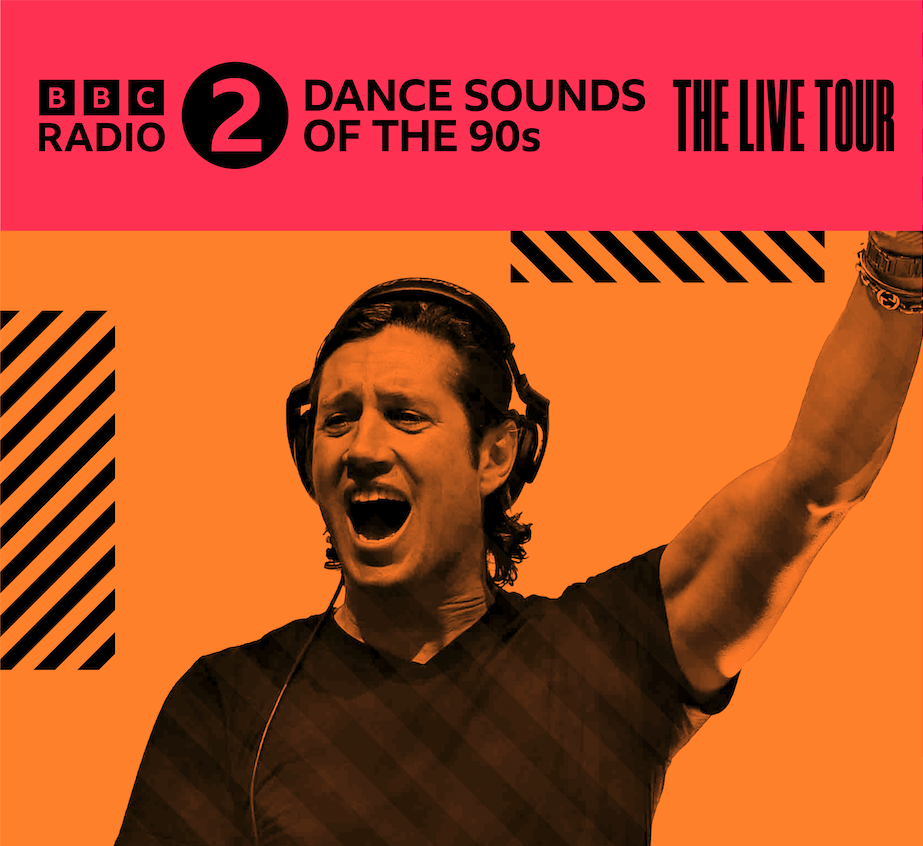
Best known for presenting Radio 2’s hugely popular weekday mid-morning show and the fan-favourite Dance Sounds of the 90s, Vernon has become one of the UK’s most recognisable broadcasters. Now, he is swapping the radio studio for the stage and inviting audiences to lose themselves in several hours of pure dance music nostalgia.
Q: The show celebrates one of the most iconic decades in music history, and everyone seems to be talking about the 90s at the moment. What is it about 90s dance music that continues to resonate with audiences today?
Vernon Kay: I think, primarily, it’s the tunes. The tunes are so recognisable and so memorable, and they transcend generations. My kids love 90s dance music, they know all the words to the big floorfillers.
But culturally, it was a massive movement because dance music really came out of the underground. It came out of the big sweatbox nightclubs and filtered into your kind of ‘cheesy carpet’ clubs, which was a pivotal moment because it highlighted just how popular it had become when it entered the mainstream.
From the back end of the 80s into the early 90s, we started to see dance music on Top of the Pops and it became visualised. We recognised faces and it became part of popular culture because we started to see
the DJs who were remixing and making the tunes. I remember watching reruns of Top of the Pops on the BBC and seeing Marshall Jefferson turn up doing Move Your Body (The House Music Anthem), which was hilarious… “Gotta have house!” We saw Daryl Pandy singing and like I said, we saw the commerciality of dance music.
Q: What was the soundtrack to your youth? Were you exclusively into dance music?
Vernon Kay: Everything. It was a real mix. I just like music, so I didn’t have one particular taste or one particular genre that I liked. I loved it all. I was into Nirvana, but I was also into what you’d probably call Scouse techno. I was into a bit of everything.
Q: Do you remember your first real clubbing experience in the 90s?
Vernon Kay: Well, I’m a bit of a social butterfly, I liked everything. We were in the dark, dingy clubs, we were in the commercial clubs, we were going to pubs to see bands and we were heading to the big venues in Manchester to see bands as well. I kind of liked everything.
I guess the first proper nightclub I went to that was associated with dance music would have been Legends in Warrington. It was a real dark sweatbox. It used to be the VIP room of Warrington Rugby Club because it was actually inside the stadium. It was amazing.
And Darren Noguerol, who DJs with me on Dance Sounds of the 90s, was the DJ there, so I’m really lucky to have such an accomplished and established DJ with me on this tour.
Q: Was that one of your regular clubs during the 90s? Would you go on a Friday or Saturday?
Vernon Kay: We used to go on a Saturday. We’d flip-flop between there and The Hacienda.
Q: Were there particular venues or bands you loved seeing live?
Vernon Kay: We used to go to Manchester a lot. We were always in and out of the city watching bands. We used to go to The Boardwalk as well, there were loads of places, and I think they all played a pivotal part in the evolution of what I liked and what I gravitated towards, rock ‘n’ roll and dance music. It was a nice balance.
Q: You’ve spent years playing these tracks on Radio 2. How different is it bringing them to a live audience?
Vernon Kay: The best thing is that people are still losing their minds. Even though, allegedly, we’re supposed to mature and get older, people have the best time.
I think now Dance Sounds of the 90s is people’s release. A lot of people don’t get out much, they’re middle-aged, they’re parents, they’re working, they’re grafting, so they come out and can literally let themselves go like they did when they were younger and have no responsibility.
Q: The 90s were a very different world before smartphones and social media. Do you think that made nights out feel more special?
Vernon Kay: I think it did because you were in those rooms as a collective, not as an individual.
I always say that when people film things, they never watch them back. It’s kind of bragging rights that you were there at a gig. Every time you lift your phone up and focus on your screen, you’re missing a moment that’s happening right in front of you.
It’s nice to have memories. We used to take Snappy Snap cameras, and it’s nice to take videos, but I’ve always said that once you’ve got a couple, you don’t need any more.
Q: What can audiences expect from the live show that they don’t get from listening to the radio show?
Vernon Kay: For starters, the radio show is an hour, and Darren and I do between four and five hours of tunes. It’s a real journey and we play a bit of everything.
Darren plays the underground stuff, which is the perfect warm-up for me to come on with the floorfillers, and it’s a nice progression through the night.
It’s interesting because my set has evolved. Every now and again I’ll play a tune and think, “I wonder if they’ll remember this?” and they do. So my set has changed from being really recognisable chart floorfillers to a nice 50/50 split of tunes you’ll remember if you were clubbing back in the day and the big chart floorfillers.
Q: A lot of the big dance tracks from the 90s are being sampled and reworked by modern artists. Why do you think those songs continue to have such longevity?
Vernon Kay: It’s really simple.. because they were good. That’s all it is.
Memorable riffs and great loops are instantly recognisable and nobody can deny that. That’s why they keep cropping up, because they’re just bloody good.
Q: Are there three tracks people should listen to before coming to the show to get themselves in the mood?
Vernon Kay: I’m going to flip that question on its head and say don’t!
The reason is that if you get wound up listening to Dance Sounds of the 90s on the radio or put on a 90s playlist, some of the anticipation disappears.
The best thing to do before Dance Sounds of the 90s is go out, have dinner with your mates, chat about your expectations, talk about the 90s and what it was like then and let those thoughts put you in a time machine and take you back.
Q: Why do you think people are so hungry for nostalgia right now?
Vernon Kay: I think for my generation, and the people who come to Dance Sounds of the 90s, it’s because life sometimes gets ahead of you. We’ve not really had the chance to stop and take in what’s going on.
The 2000s were alright. The 2010s, nothing happened in that decade that’s instantly recognisable, in my opinion.
I think people enjoy nostalgia because it takes them back. It takes them back to when they were totally innocent of any responsibility.
Q: Finally, if you could go back and give your 1990s self one piece of advice before heading out for a night, what would it be?
Vernon Kay: Do more. Go and enjoy it. Don’t worry about the future. Live for the now. Go and have a great time. Obviously, be responsible, but experience as much as you can because, as we get older, it’s shocking how often Monday comes around.
2026 LIVE DATES:
4 Sept – G Live – Guildford
18 Sept – O2 Forum Kentish Town – London
2 Oct – Hangar34 – Liverpool
6 Nov – Scarborough Spa – Scarborough
27 Nov – Corn Exchange – Edinburgh
READ MORE: Brad Kella Honoured with Blue Plaque at Spot Where Busking Journey Began