
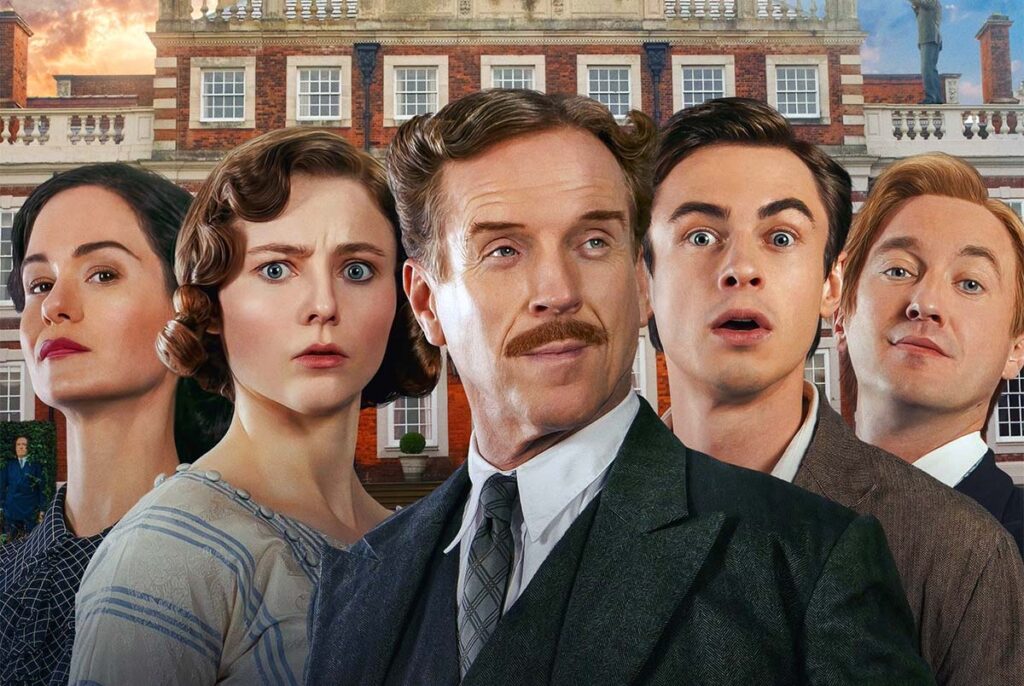
Step back into the glamour of 1930s England with Fackham Hall, a razor-sharp period comedy packed with wit, scandal and outrageous British charm, filmed right across the Liverpool City Region.
Penned by comedian Jimmy Carr in his screenwriting debut, this star-studded feature brings together lavish costumes, biting satire and a cast that revels in the era’s eccentricities. If you love a clever twist on classic British heritage drama, you’re in for a treat, imagine Downton Abbey colliding spectacularly with Airplane! or Bridgerton meeting The Naked Gun.
Want to explore the world of the chaotic Davenport family for yourself? Here’s where Fackham Hall was filmed across the region.
Croxteth Hall and Country Park
With its sweeping estate, aristocratic interiors and charmingly preserved servant quarters, Croxteth Hall embodies the upstairs–downstairs divide that runs through Fackham Hall. The building’s Edwardian elegance — original furnishings, servant bells and even a working hydraulic kitchen lift — captures the period beautifully.
Scenes to look out for:
- Victorian kitchens
- Queen Anne Front steps
- Lady Sefton’s parlour
- Grand corridors
- Victorian toilets
Also seen in: House of Guinness, The War of the Worlds, Peaky Blinders
While you’re there: Check the website for guided tours and step straight into the world of the Davenports. The wider Country Park is full of family-friendly activities — meet the Highland cows at the working farm, wander the walled garden, or hop aboard the miniature railway.
Knowsley Hall
Knowsley Hall plays the leading role as Fackham Hall itself — an opulent estate that sets the scene for the film’s wildest aristocratic antics. Home to the Earls of Derby for more than 600 years, this historic mansion brings grandeur, humour and chaos together in perfect harmony.
From lavish wedding scenes to farcical misadventures, the house and its manicured grounds are a centrepiece of the film’s visual style.
Also featured in: The Ipcress File, Hollyoaks
Nearby: Spend the day at Knowsley Safari, or head over to Shakespeare North Playhouse — home to the only 17th-century-style timber “Cockpit” theatre outside London.
Cunard Building & Water Street
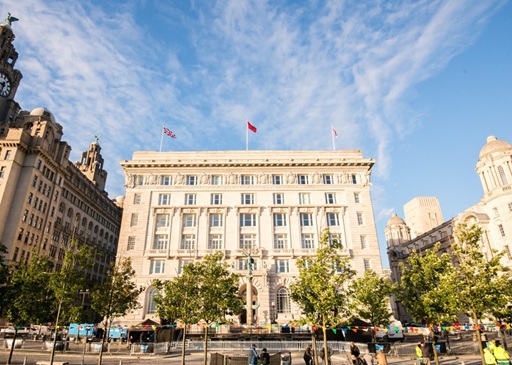
One of Liverpool’s iconic Three Graces, the Cunard Building provided the perfect waterfront backdrop for the film’s 1930s aesthetic. The production team transformed Water Street with vintage cars, props and even rain towers to create immersive outdoor scenes.
The building’s classical grandeur doubled seamlessly for the world of Fackham Hall, adding scale, elegance and a touch of civic drama.
Also featured in: I Can See You (Taylor’s Version), This City is Ours, The Crown, Our Girl, It’s a Sin, Cilla, Florence Foster Jenkins, The English Game
While you’re there: You’re in the heart of Liverpool’s waterfront — take a Mersey Ferry, tour the Royal Liver Building, visit the Museum of Liverpool or explore the British Music Experience. And don’t forget a photo with the famous Beatles statue.
Aloft Hotel, North John Street
Set inside the former Royal Insurance Building, the Aloft Hotel brings early-1900s architectural elegance to the film. Its striking neo-Baroque façade and ornate interiors made this Grade II* listed landmark an ideal fit for filming.
Beautifully restored and now a stylish hotel, it blends heritage and modern design in a location right at the centre of the city.
While you’re there: Liverpool ONE is moments away, packed with independent gems like Utility and the new ARNE store, plus dining spots and entertainment including Gravity MAX.
Hamilton Square, Birkenhead
Hamilton Square’s Georgian terraces and formal symmetry delivered the perfect period look for outdoor scenes. With one of the UK’s finest collections of Grade I listed buildings, the square’s distinctive character helped the film capture a quintessentially British mood.
While you’re there: Browse Make Hamilton Square — a creative hub with artisan studios, a seasonal café and even rooftop beehives. For more culture, visit Williamson Art Gallery & Museum.
Thornton Hough
This postcard-perfect Wirral village offered another slice of timeless English charm. With cobbled lanes, traditional cottages and lush green spaces, Thornton Hough brought warmth and old-world character to the film.
Its 17th- and 18th-century buildings made it ideal for scenes set beyond the high society world of Fackham Hall, balancing glamorous chaos with village authenticity.
St George’s United Reformed Church
Its picturesque design made it a key filming location and an essential backdrop to several pivotal moments.
The Folds
This well-known corner of the village provided rustic contrast to the estate scenes, with its cobbles and historic architecture capturing the charm of rural Britain.
Thornton Hough Village Club and Bar
This traditional pub was used for interior scenes — its authentic character bringing warmth and humour to moments away from the grandeur of the Davenport estate.
While you’re there: Book a table at the Village Club & Bar, where artefacts from the film remain on display. For a real treat, enjoy a spa day or overnight stay at the nearby Thornton Hall Hotel & Spa.
You can find out more about film locations on Visit Liverpool’s website here.
READ MORE: Six-part Beatles Drama Hamburg Days lands at the BBC