
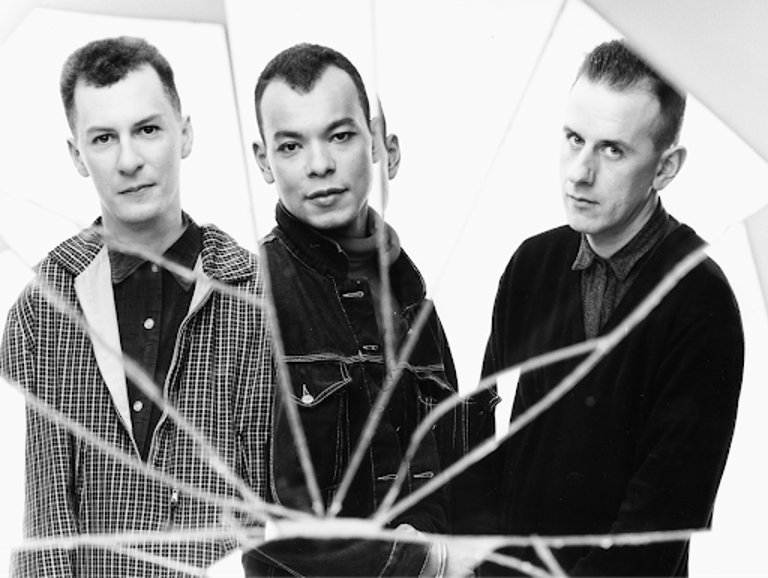
Forty years after Fine Young Cannibals burst onto the scene with “Johnny Come Home”, the band’s influence continues to resonate across generations. As London Records prepares to release FYC40, a definitive career-spanning compilation celebrating the band’s remarkable legacy, frontman Roland Gift sat down with Explore Liverpool‘s Matthew Jacobson to discuss the group’s beginnings, songwriting, live performance, Liverpool’s musical heritage and why Fine Young Cannibals’ songs still connect with audiences today.
In 1985, Fine Young Cannibals made an unforgettable first impression with their debut single “Johnny Come Home” and their self-titled debut album, introducing a sharp, soulful sound that immediately stood apart from the era’s pop landscape.
Four years later, The Raw & The Cooked propelled the Birmingham trio onto the global stage. Powered by timeless hits including “She Drives Me Crazy”, “Good Thing” and their celebrated version of “Ever Fallen In Love”, the album sold more than five million copies worldwide and cemented the band as one of Britain’s defining musical exports.
Now, forty years on from their formation, London Records is celebrating the legacy of Fine Young Cannibals with FYC40, a new anthology released on December 5 featuring classic hits, rare tracks, unreleased remixes and restored live performances.
Ahead of the celebrations and upcoming tour dates, Roland Gift spoke to Explore Liverpool’s Matt Jacobson about the journey behind the music.
Going back to the early years, when Fine Young Cannibals first formed, what was the aim of the band?
We wanted to create music that would last. We were listening to Otis Redding, Marvin Gaye and American soul music — that was something we all had in common.
We’d all come out of punk as well. We wanted to make music that would last 25 years because we were listening to stuff that was already 25 years old. That was one of the main things really.
Before Fine Young Cannibals, you were already performing in bands. Did you know early on that you had such a distinctive voice?
Yeah, I think I did, only because people had told me that in the groups I’d been in before. People had been very kind and complimentary. So I had that appreciation of my voice, I guess. Yeah, I felt good about my voice.
What do you remember most about those early live shows?
I’d played live before with The Acrylics. We supported The Beat, The Clash, Dexys, The Specials — we supported a lot of groups. We were kind of a group that almost made it. I’ve got this picture in my head of us standing on the dock while the ska boat has taken off — and we missed the boat.
But with Fine Young Cannibals, it became more of the same really. We started with smaller gigs, then toured America, then toured with UB40, and then eventually had our own big tour with The Raw & The Cooked.”
Were there particular moments where you realised the band had really arrived?
I remember being at Andy’s house waiting to hear a record on the John Peel show for the first time. That was a landmark. Then we went on The Tube and performed live — that was another landmark. Then you do Top of the Pops, and that’s the landmark.
Do you still enjoy performing live as much now as you did back then?
Yeah, live is great because it’s always different. You never know what’s going to happen. There’s pressure because you want to do well. There’s always a chance of something going wrong because there are so many moving parts. It keeps you sharp. like writing and performing. The studio often feels a little bit like a laboratory — a little bit clinical. Live performance gives you a different buzz.”
Recording technology has changed massively over the years. Are you still a studio person?
It depends on what the project needs. I did a Christmas single called Everybody Knows It’s Christmas with Ben Bass, and we did quite a bit of that in the studio. But sometimes people send parts over digitally now. It’s really whatever helps you accomplish what you need.
What is your songwriting process like? Do you sit down deliberately to write?
No, I think I’m always open to it. I’m not one of these people who makes it a nine-to-five occupation. Somebody might say something, or I’ll hear something, or I’ll just be watching TV and suddenly something comes. It’s usually about allowing something in and being open to it.
Fine Young Cannibals blended soul, pop and dance music so naturally. Did everyone bring different influences into the band?
Yeah, definitely. We all had soul music in common, but everyone brought their own influences as well. David Steele knew a lot about jazz. Our American manager managed Herbie Hancock, and I remember Herbie talking with David almost trying to catch him out — but David really knew his stuff. When a group works well, everybody contributes. It’s like spices in a pot — you need the right balance.
With anniversaries being celebrated now, do you spend much time reflecting on the past?
I don’t like to rest on my laurels. I like to be creative. I do things like Rewind Festival, but I also do new songs. I wouldn’t want to only perform old material because then it starts feeling like a nine-to-five job.
Liverpool has such a huge musical history. What are your memories of the city?
My fiancée’s family are from Liverpool, so I’ve got connections there. It’s funny because Liverpool was one of those places that already felt familiar before I’d even been there. I used to love The Liver Birds growing up. Liverpool feels familiar because it’s made such a cultural impact.
Finally, how does it feel knowing younger audiences are still discovering and connecting with Fine Young Cannibals music today?
It feels really good because people say the songs still stand up. They haven’t dated — they still feel relevant. You don’t want to be trying to hawk some old scrap nobody really wants anymore. So it’s great that people still like the songs.
And I still like doing them as well. They still feel worth it.
Thank you for your time Roland and best wishes for the tour and future.
Thanks Matt, much appreciated.
Few British bands have managed to sound as timeless and distinctive as Fine Young Cannibals. Four decades after their formation, their songs continue to appear in films, television, fashion campaigns and playlists around the world — proof that the band achieved exactly what they originally set out to do. “We wanted to create music that would last,” Roland Gift reflects. Forty years later, Fine Young Cannibals are still doing exactly that.
Matt Jacobson
Explore Liverpool
Tour Dates
Fine Young Cannibals – 40th Anniversary Tour
- Liverpool Philharmonic Hall – October 18
- Birmingham Symphony Hall – October 21
- Manchester Bridgewater Hall – October 24
- Glasgow Royal Concert Hall – October 27
- London Eventim Apollo – October 31
READ MORE: Matthew Jacobson interviews Dave Hill on Slade’s Final Tour