

The Beatles Legacy Group (BLG) is marking a decade of protecting the cultural and economic impact of the Fab Four in their home city.
Formed in 2016 following a landmark report that valued the band’s impact on the local economy at £81.9m, the group has spent ten years enhancing the visitor experience in the city where it all began.
To celebrate this milestone, the BLG will officially launch the Liverpool Music Heritage Trail on Tuesday 24 March.
This new initiative tracks 60 years of local music history, shining a spotlight on the cultural value of the venues that shaped the city’s identity.
A Journey Through Vinyl Record Plaques
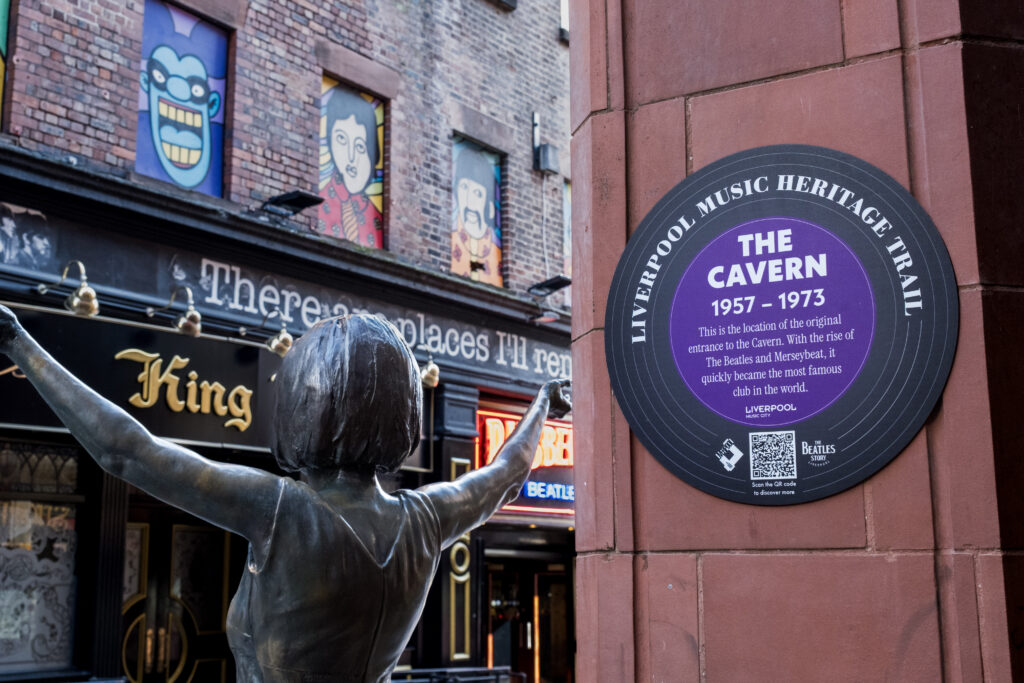
Supported by funding from The Beatles Story, the trail is the first of its kind in Liverpool.
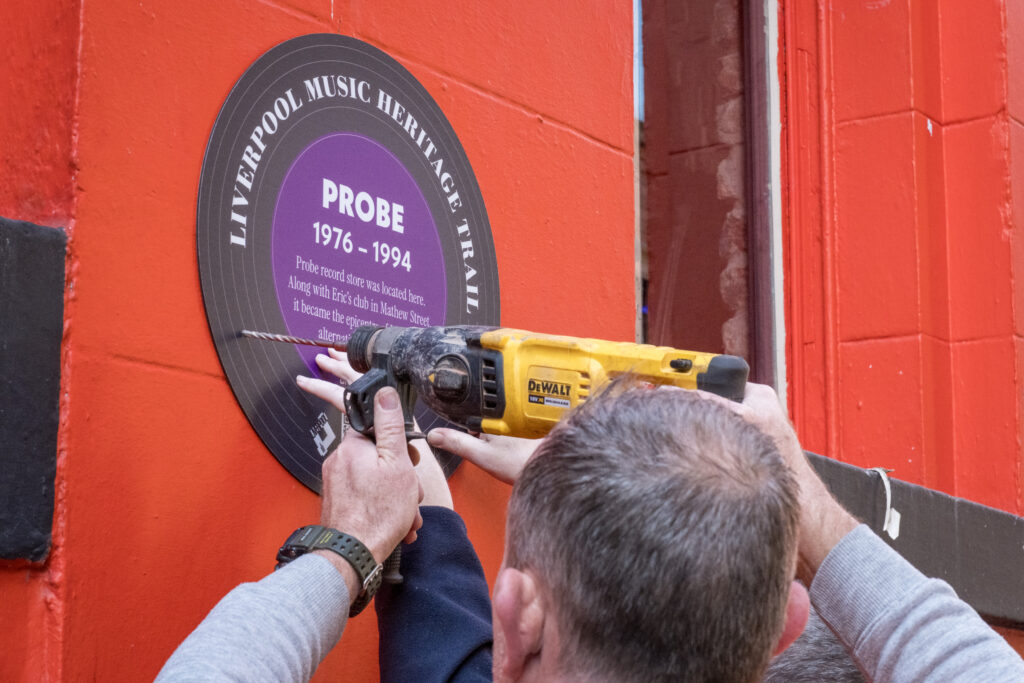
It features 12 plaques designed in the style of vinyl records, positioned at key locations that influenced the music scene between 1957 and 2016.
These sites reflect a unique identity born from the city’s maritime heritage, where grassroots scenes thrived in warehouses and brick-built basements to create global phenomena.
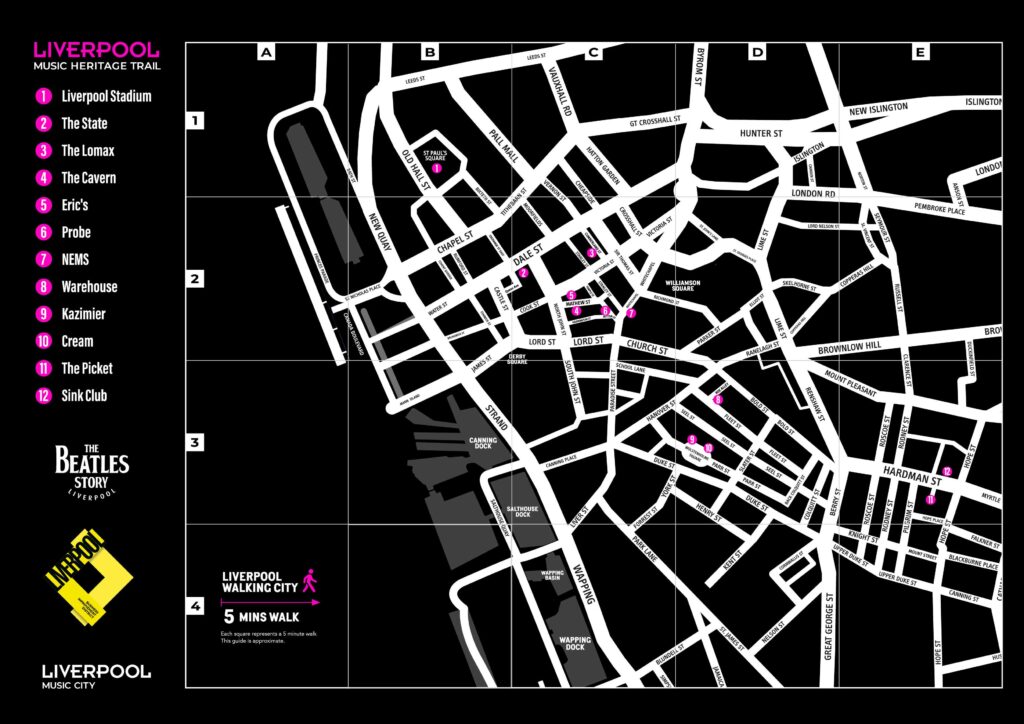
The free walking trail takes approximately 90 minutes to complete.
It includes the original entrance of The Cavern Club on Mathew Street alongside other legendary names such as Eric’s, The Lomax, Probe Records, NEMS, The Sink, and the world-renowned super-club Cream.
Each location is equipped with QR codes, allowing visitors to connect with videos, historical information, and curated Spotify playlists that bring the human experiences of these venues to life.
Peter Hooton, Chair of the BLG and frontman of The Farm, explained that the concept grew from his own time leading music tours. He said:
“As I was pointing out venues and record shops that no longer existed, people on the tour would ask me why there was no reference to many of these iconic places that had inspired and shaped our musical and cultural identity.
“I knew I had to try and celebrate them before they were lost in the mists of time.”
From the Birth of The Beatles to Modern Legends
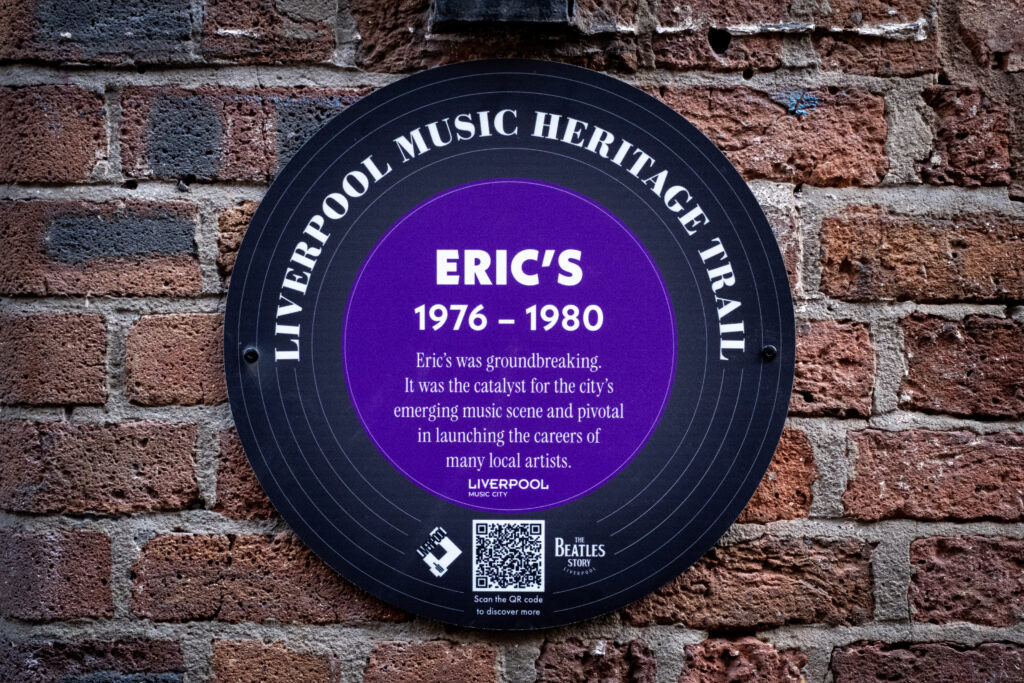
The trail begins in 1957, the year John Lennon and Paul McCartney first met and the original Cavern Club opened its doors. It also highlights the moment in 1962 when the band signed their first management contract with Brian Epstein at NEMS on Whitechapel.
However, the trail extends far beyond the Fab Four.
It explores the punk and new wave era at Eric’s, which hosted acts like The Clash and Joy Division, and moves through to the more contemporary Kazimier in Wolstenholme Square.
These diverse locations demonstrate how quickly music scenes develop, often transforming disused industrial spaces linked to the port into hubs of creativity.
Mayor of the Liverpool City Region, Steve Rotheram, commented on the enduring power of this heritage:
“The story of The Beatles began here, and their success helped put our city on the global cultural map.
“But The Beatles’ legacy is about much more than the past. It ignited a creative spark that still defines our region today.
“By protecting and promoting that heritage, we’re ensuring future generations continue to be inspired by the city that helped give the world a new soundtrack.”
Looking Toward the Next Decade
In addition to the trail, the BLG has announced plans to form a not-for-profit Community Interest Company (CIC).
The group is also commissioning a new report to review the cultural and economic value of The Beatles over the last ten years.
Kevin McManus, Head of UNESCO City of Music at Liverpool City Council, highlighted the group’s achievements, including the development of a Masters in Beatles Studies and the creation of a Beatles Education Officer post.
He said:
“As a group, over the past 10 years we have supported a number of initiatives including the development of a Masters in Beatles Studies at the Institute of Popular Music, the creation of a Beatles Education Officer post, artwork commissions and the latest Music Heritage Trail.
“With more work to come and more quantifiable activities and opportunities to evaluate, including the additions of Strawberry Fields, the Beatles Museum on Mathew Street and the British Music Experience, it’s a great time to commission a follow-up report to assess the impact of The Beatles on our city.
“It will enable us to move forward into the next 10 years with really useful information to help guide our activities.
“We are also taking steps to formalise the group further by developing into a CIC to continue to have an impact and purpose within the Liverpool community.
“We want to work with our partners, neighbours and key people in the music community to support our shared goals to improve and sustain the impact of The Beatles on the city’s economy and cultural landscape”
Mary Chadwick, General Manager at The Beatles Story, added:
“For the past 36 years, we at The Beatles Story Museum at The Royal Albert Dock have been keeping the legacy of The Beatles alive through immersive experiences and impressive artefacts that tell the band’s story.
“We’re fortunate to be at the centre of Liverpool’s rich and important music history, and to be able to support this new Music Heritage Trail.
“Keeping alive the legacy of not only The Beatles but of the city’s wider music impact, is something we’re very proud of.”
With the addition of newer attractions like Strawberry Field and the British Music Experience, the upcoming report will provide vital data to guide the group’s activities for the next decade.
Families and music fans can download the trail map for free at the official Liverpool Music City website to begin their own journey through the sounds of the city.