
Few symbols are as closely connected to Liverpool as the Liver Bird.
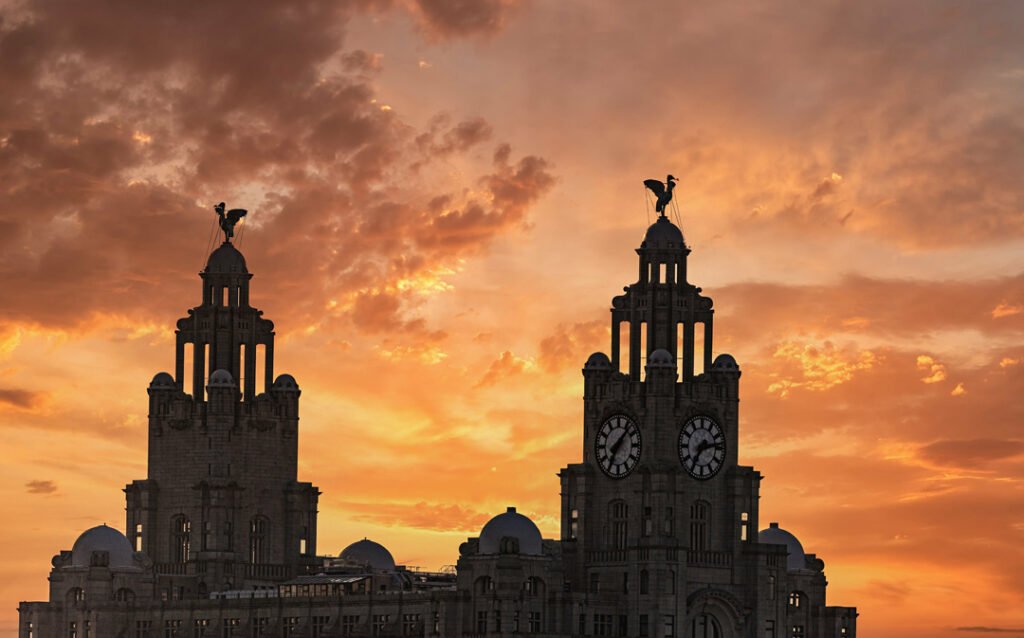
The two most famous examples stand proudly above the Royal Liver Building, watching over the city and the River Mersey. However, the story of the Liver Bird began centuries before the waterfront landmark was constructed – and there are many more of the birds hidden across Liverpool.

From medieval seals and maritime history to local legends involving Bella and Bertie, here is the story behind Liverpool’s most recognisable symbol.
What is a Liver Bird?
The Liver Bird is a mythical creature that has become the traditional symbol of Liverpool.
Although it is usually shown as a cormorant-like bird, it is not a real species. National Museums Liverpool describes the Liver Bird as a changing symbol that has included features associated with eagles, cormorants and other birds over the centuries. You can read more about the history of the Liver Bird through National Museums Liverpool.
It is normally pictured holding a sprig or branch in its beak, with the plant eventually interpreted as laver seaweed – another possible play on the name Liverpool.
Where did the Liver Bird come from?
The origins of the Liver Bird can be traced back to medieval Liverpool.
King John granted Liverpool its first Royal Charter in 1207, establishing the settlement as a borough. Liverpool’s medieval seal later featured a bird that historians believe was originally intended to represent the eagle of St John the Evangelist, King John’s namesake and patron saint.
As the centuries passed, the bird’s original identity became less clear. It began to be described as a cormorant, a “leaver” and eventually a Liver Bird.
The design continued to change depending on the artist, building or object on which it appeared. Some Liver Birds have webbed feet, others have talons, while their shape can vary from an eagle-like heraldic bird to the familiar cormorant-style figure recognised today.
The Liver Birds on the Royal Liver Building
The world-famous Liver Birds have stood on top of the Royal Liver Building since it opened in 1911.
The Grade I-listed building was designed by architect Walter Aubrey Thomas and was one of the earliest multi-storey reinforced-concrete buildings in the world. The copper Liver Birds above its clock towers were designed by German sculptor Carl Bernard Bartels.
Each bird weighs approximately four tonnes, making them far more substantial than they appear when viewed from the Pier Head.
They have since become two of the most photographed features of Liverpool’s waterfront and helped establish the Liver Bird as an internationally recognised symbol of the city.

Who are Bella and Bertie?
The two Liver Birds are affectionately known as Bella and Bertie, although these names and the stories surrounding them belong to Liverpool folklore rather than documented medieval history.
According to popular legend, Bella looks out towards the River Mersey, watching over sailors and welcoming them safely home. Bertie faces the city, protecting the people and families of Liverpool.
A more humorous version of the story says Bertie is looking towards the city to check whether the pubs are open.
Another famous Liverpool legend claims that if the Liver Birds ever fly away, the city will cease to exist. Thankfully, the enormous copper birds appear to be staying exactly where they are.
Can you visit the Liver Birds?
Visitors can now get much closer to Liverpool’s famous residents by taking the Royal Liver Building 360 tour.
The experience includes the building’s visitor centre, a guided journey into the historic clock tower and panoramic views from the 15th-floor viewing platform. The tour also provides the opportunity to see the Liver Birds from a perspective that was unavailable to the public for more than a century.
Hidden Liver Birds around Liverpool
Bella and Bertie may be the most famous, but they are far from the only Liver Birds in Liverpool.
The symbol appears on buildings, monuments, gates, floors, sculptures and decorative stonework throughout the city. Some are easy to spot, while others can be missed unless you know where to look.
Mersey Chambers
A bronze Liver Bird can be found above the central section of Mersey Chambers on Old Churchyard, close to the Church of Our Lady and St Nicholas.
The building predates the Royal Liver Building, making this one of the city centre’s most significant historic representations of the bird.
Museum of Liverpool
One of Liverpool’s largest historic Liver Birds once stood on top of the old St John’s Market building.
The stone finial was removed when the market was demolished in 1964 and is now preserved as part of the Museum of Liverpool’s collection. Visitors can also follow the museum’s Liver Bird Trail to discover how different versions of the symbol have appeared throughout the city’s history.
Bluecoat
Look above the entrances at Bluecoat on School Lane and you will find Liver Birds incorporated into the historic building’s decorative features.
One can be seen within the broken pediment above the central entrance, forming part of the Grade I-listed building’s detailed architecture.
George’s Dock Building
The George’s Dock Building, which forms part of the Queensway Tunnel’s ventilation and control system, is filled with Art Deco details celebrating Liverpool’s maritime identity.
Liver Birds appear within the building’s decorative design, including on the upper sections of columns around the central tower. The landmark was constructed between 1925 and 1934 as part of the Mersey Road Tunnel development.
The Municipal Hotel & Spa Liverpool
The former Municipal Buildings on Dale Street are now home to The Municipal Hotel & Spa Liverpool – MGallery.
The historic exterior includes a carved Liver Bird surrounded by eagles, while more Liver Bird medallions can be found within the building’s grand staircases and decorative interior.
Picton Road Baths
Away from the waterfront, another Liver Bird can be found inside the former Picton Road Baths in Wavertree.
The specially commissioned piece of Pilkington faience work was created for the building, which opened in 1906. It remains another example of how widely the city’s symbol was used on Liverpool’s civic buildings.
Walker Art Gallery
The Liver Bird also appears as part of the Spirit of Liverpool sculpture above the Walker Art Gallery.
The sculpture combines the bird with other symbols connected to Liverpool’s maritime, commercial and artistic history.
The Liver Birds on television
The name was also used for the popular BBC sitcom The Liver Birds.
Created by Liverpool writers Carla Lane and Myra Taylor, the programme followed the lives of young women sharing a home in Liverpool. It originally ran between 1969 and 1979 before returning for a revival in 1996.
Its opening titles featured recognisable Liverpool landmarks including the Pier Head, the Mersey Ferries and the Liver Birds above the Royal Liver Building.
How many Liver Birds are there in Liverpool?
There is no definitive total.
The number depends on whether you include only sculptures and carvings or every coat of arms, tile, plaque, gate, floor and decorative image bearing the symbol.
What is certain is that there are far more than the two birds on the Royal Liver Building. Once you begin looking closely at Liverpool’s architecture, Liver Birds seem to appear almost everywhere.
From grand waterfront landmarks to small carvings hidden above doorways, each one forms part of a symbol that has represented Liverpool for centuries.
How many have you spotted around the city?