
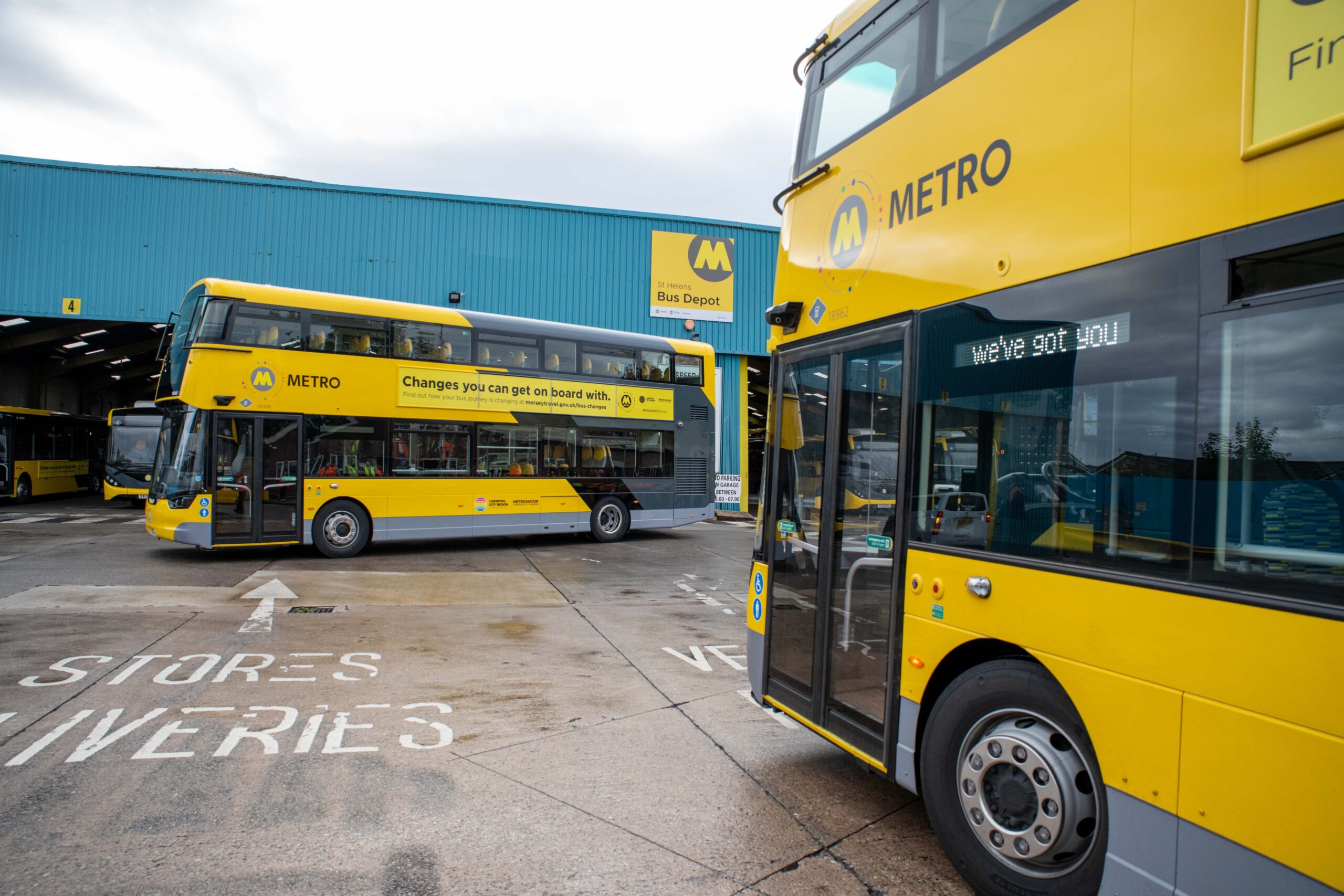
Passengers in St Helens are benefiting from more frequent buses, improved evening and weekend connections and a new fleet of Metro vehicles after the area’s bus network returned to public control for the first time in almost 40 years.
The first phase of Mayor Steve Rotheram’s franchised bus network launched on Sunday 6 September, giving the Liverpool City Region Combined Authority control over routes, timetables and service standards.
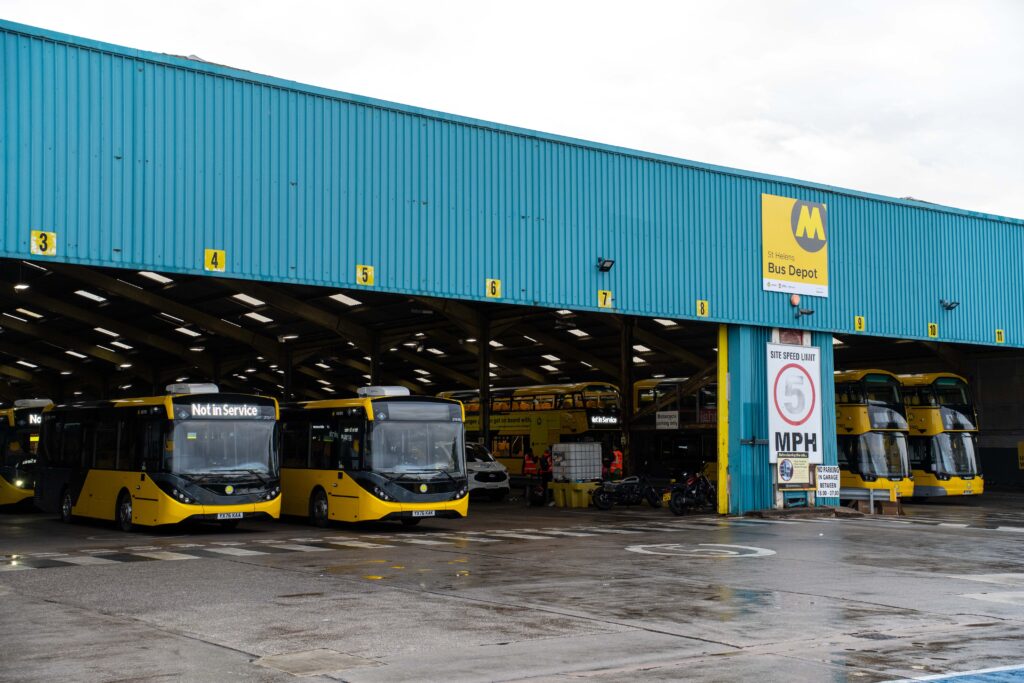
It means decisions over when, where and how often buses run will once again be made locally, while operators will be required to meet standards covering reliability, punctuality and cleanliness.
Among the immediate changes are more frequent weekend and evening services, improved links to hospitals and rail interchanges, and a new express connection to Liverpool John Lennon Airport.

Passengers are also travelling on brand-new UK-built Metro buses in the Liverpool City Region’s distinctive yellow and grey livery.
The low-emission vehicles feature USB charging points, more comfortable seating and additional space for wheelchairs and prams.
The £2 single bus fare cap will remain in place across the Liverpool City Region, alongside the £2.20 MyTicket fare for passengers aged under 19.
Work is also continuing towards introducing seamless contactless ‘tap-and-go’ travel across bus, rail and Mersey Ferries services in the coming years.
St Helens is the first part of the Liverpool City Region to move to the new franchised system.
Wirral’s bus network is due to return to public control later this autumn, with Liverpool, Knowsley and Sefton following in future phases as franchising expands across the city region by the end of 2027.
The changes come alongside major investment in St Helens’ wider transport network, including the new £35m St Helens Transport Interchange currently under construction in the town centre.
The Metro buses form part of a wider overhaul of public transport across the Liverpool City Region.
They join the region’s publicly owned Merseyrail trains and its first brand-new Mersey Ferry in more than 60 years as the city region modernises its transport fleet.
From 2028, the Merseyrail network is also due to return to public control, with plans aimed at creating a more integrated network across buses, trains and ferries.
Steve Rotheram, Mayor of the Liverpool City Region, said:
“Seeing those new yellow buses out on the streets of St Helens yesterday was a really proud moment. We’ve spent years working to take back control of our buses because, for too long, passengers have had to put up with a system that simply hasn’t worked well enough for them.
“People don’t ask for the earth. They want a bus that turns up on time, that doesn’t cost a fortune and that gets them where they need to go – whether that’s work, school, the hospital or home to see their family.
“Taking back control gives us the power to start delivering that. As we take back control of the whole system, we’ll be able run more services in the evenings and at weekends, better connect people with jobs and opportunities and hold operators to account when standards aren’t good enough. And we can keep fares affordable too.
“This is the biggest change to our buses in nearly 40 years and I’m incredibly proud that St Helens is leading the way. But we’re only getting started. Wirral is next and, by the end of next year, the whole of our city region will be part of a network run in the interests of the people who actually use it.
“For me, that’s what taking back control is really about: giving people a better bus service and making it easier, cheaper and more reliable to get around the place they call home.”
Local Transport Minister Simon Lightwood said:
“We’re giving those who best know the Liverpool City Region’s buses even more power to deliver better, more affordable and reliable services.
“This is a huge testament to Mayor Steve Rotheram’s determination to put buses back at the heart of the community – and to our No10 North mission to put power back where it belongs: in local hands.
“From the national £2 bus fare cap to free bus travel for disabled people, we’re backing better buses and reversing decades of decline.”
Cllr Dr R. George Woodward, Leader of St Helens Borough Council said:
“Access to reliable, affordable public transport is essential for many residents, and it is encouraging to see the first public buses launch in St Helens Borough.”
“Bus franchising has the potential to deliver more frequent services, extended operations, and better route planning to serve local people. I hope to see the benefits for passengers and for the scheme to demonstrate good value for taxpayers’ money.”
Further changes to bus routes, timetables and services are expected over the coming months and years.
The wider transport programme is backed by £1.6bn secured through the Transport for City Region settlement, which is funding infrastructure improvements, greener transport and regeneration projects across the region.
Plans are also being developed for a new Rapid Transit system designed to complement the franchised bus network and Merseyrail.
The proposed high-capacity, trackless system would provide fast and frequent links between major locations including Liverpool John Lennon Airport, football stadiums and commercial centres.
Since Steve Rotheram was first elected Liverpool City Region Mayor, the Combined Authority says it has invested more than £500m in the rail network, including delivering new stations at Maghull North and Headbolt Lane and progressing plans for four further stations.
Tap-and-go ticketing has also been introduced on Merseyrail, while investment is continuing in walking and cycling infrastructure across the Liverpool City Region.
You can find details of changes to timetables, routes and fares are available on the Merseytravel website.
READ MORE: First of 560 new buses ready to hit Liverpool City Region streets