

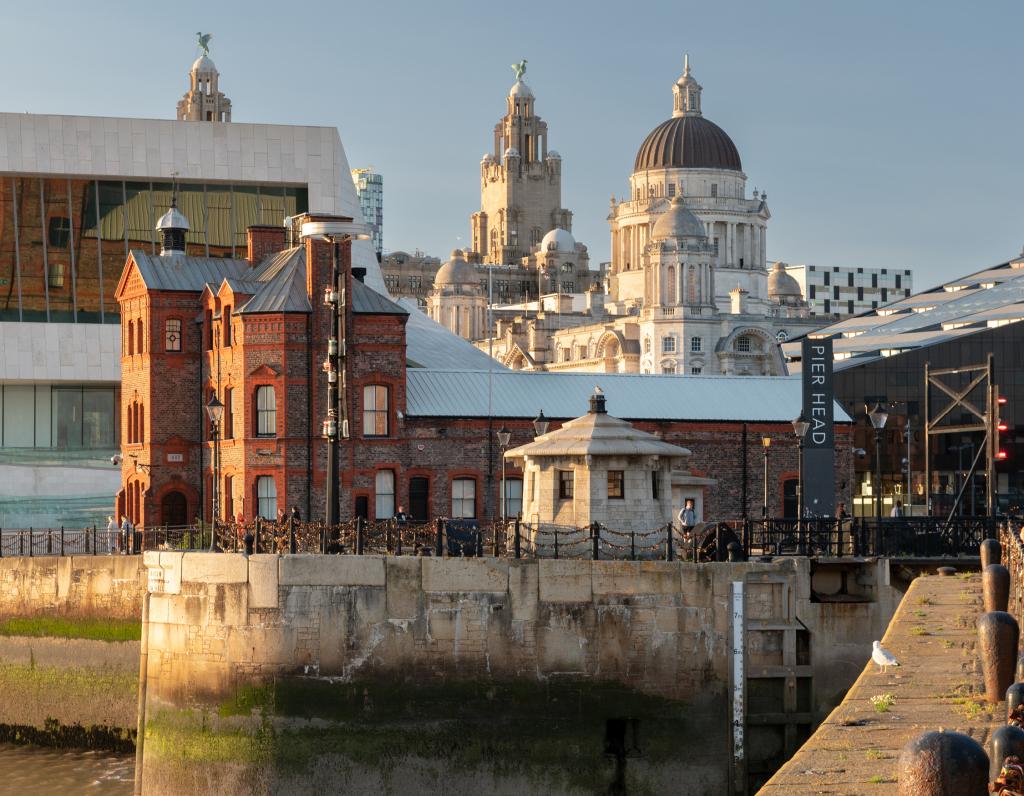
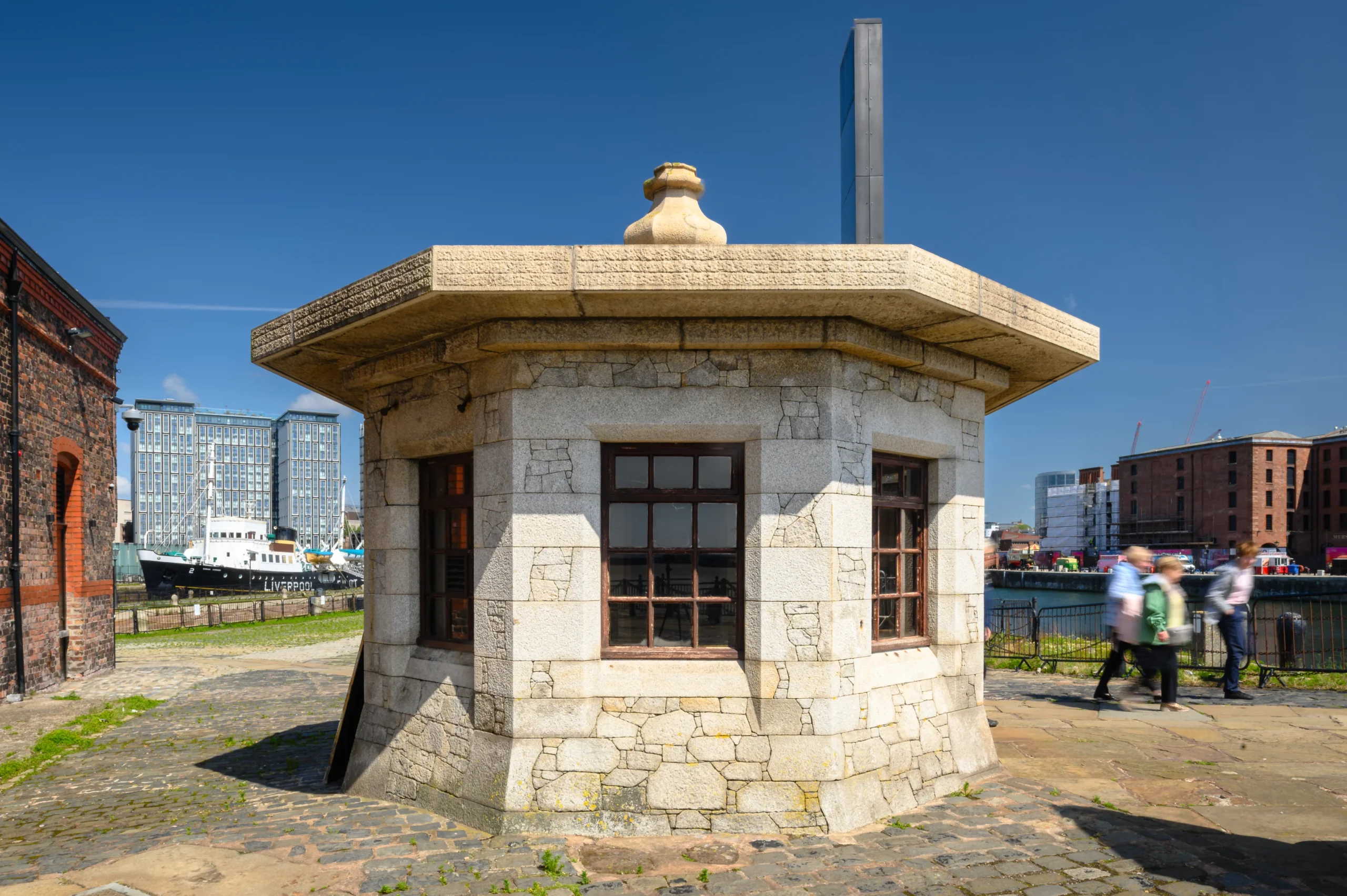
Hartley Hut, one of three octagonal granite cabins dating back to 1844, has opened as a new attraction on Liverpool’s iconic waterfront, marking the latest milestone in National Museums Liverpool’s Waterfront Transformation Project.
Following a period of research and public consultation, the hut has undergone a sensitive refurbishment by Liverpool architectural firm Harrison Stringfellow, enabling it to begin a new chapter as a fascinating micro-museum.
Drawing on real-life accounts from Liverpool Dock Gatemen, a new audio installation will immerse visitors in the memories and experiences of those who once worked there. Visitors can step inside the hut, take in panoramic views across the docks and River Mersey, and reflect on how the landscape has changed over almost 200 years.
The hut also features a new artwork, Ebb and Flow, by mosaic artist Caroline Jariwala. Inspired by its waterfront setting, the piece has been created using fragments uncovered during excavations at Manchester Dock in 2007, now the site of the Museum of Liverpool, creating a lasting link to the area’s rich maritime heritage.

Located near the river entrance to Canning Half Tide Dock, the three huts formed part of civil engineer Jesse Hartley’s dock development and played an important role as shelters and lookout points for Dock Gatemen operating the lock gates.
Despite its modest size, the hut was carefully designed for both function and comfort. Its wide overhanging eaves offered protection from the rain, while gas lighting and heating would have made it a welcome refuge on cold and windy nights. In warmer weather, it would have provided a cool, shaded space for Liverpool’s hard-working dock workers.
Like Hartley’s larger waterfront buildings, the hut’s construction was both practical and architecturally considered. Built from granite shipped from Kirkcudbrightshire in Scotland, it was designed to be strong, durable and well insulated. Hartley is thought to have drawn inspiration from ancient Greece, using ‘cyclopean’ stonework similar to that seen at Mycenae. The term refers to the huge scale of the stone blocks, once believed to be so immense they could only have been moved by the mythical Cyclops.
Now reopened to the public, Hartley Hut offers visitors a rare opportunity to step inside an often-overlooked piece of Liverpool’s dock history and experience a new perspective on the city’s world-famous waterfront.
Liz Stewart, Head of Museum of Liverpool said:
We find visitors to Liverpool’s waterfront are impressed not only by the beauty of the place and the wonder of its architecture, but also the strong connection they feel to its fascinating history.
The Hartley Hut may not be a grand building in scale, but we believe it’s a real treasure among the architecture of the waterfront and that its stories will resonate with our visitors.
Those with their own connection to the dock worker community, along with anyone who has a passion for history and what the built environment can reveal about our past, should make a trip to this wonderful new attraction on our waterfront.
The Waterfront Transformation Project spans the area between Royal Albert Dock and Mann Island, taking in key landmarks and revitalising all National Museums Liverpool’s waterfront facilities.
The landmark project links storytelling, heritage, community, connectivity, and commercial income to create a cohesive visitor experience and catalyst for social and environmental improvements in the area. It comprises four main areas:
- International Slavery Museum and Maritime Museum major redevelopment
- Canning quaysides and dry docks major redevelopment
- Museum of Liverpool reconfiguration – completed in 2023
- Historic dockside buildings refurbishment (including Hartley Hut)
Hartley Hut will be open Tuesday to Sunday. Like all National Museums Liverpool’s venues, the building will also be open on Mondays during school holidays and follow seasonal opening hours. Check website for details.
READ MORE: 80 year anniversary celebration to take place on the River Mersey